

Printing with flexible filament can be tricky. Many 3D printers struggle to handle the material without clogging or poor print quality.
The best 3d printer for flexible filament delivers consistent results while minimizing jams and failures. These printers often feature specialized extruders or settings designed to manage the unique demands of flexible materials.
They are suitable for hobbyists, designers, and professionals looking to expand their printing capabilities. This review will cover key features to look for, how different models perform with flexible filaments, and practical advice on choosing a printer that fits your needs.
| Image | Name | Our Rating | Price |
|---|---|---|---|

|
Geeetech TPU Filament 1.75mm, Shore 95A ...
|
|
|

|
Geeetech TPU Filament 1.75mm, Shore 95A ...
|
|
|

|
SUNLU TPU 3D Printer Filament 1.75mm, Hi...
|
|
Discover Top Machines That Bring Your Elastic Creations to Life with Precision and Ease
| Image | Product | Price |
|---|---|---|
Our Top Picks 1  | Geeetech TPU Filament 1.75mm, Shore 95A Flexible 3D Printer Filament | Check Price |
Our Top Picks 2 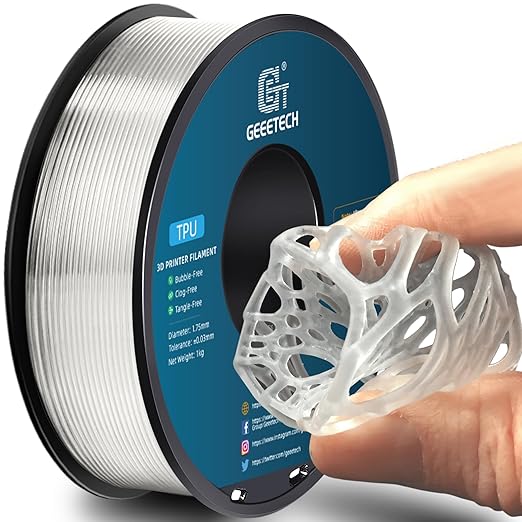 | Geeetech TPU Filament 1.75mm, Shore 95A Flexible 3D Printer Filament | Check Price |
Our Top Picks 3 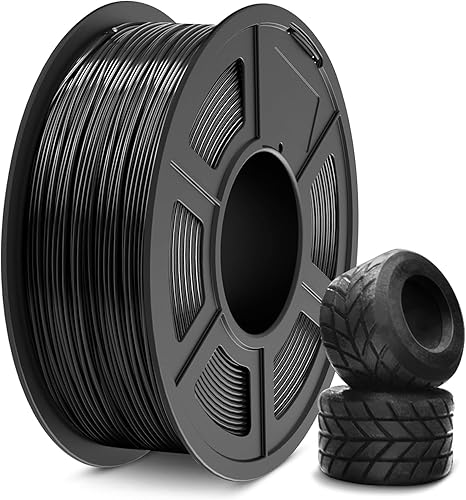 | SUNLU TPU 3D Printer Filament 1.75mm, High Speed 95A TPU | Check Price |
1. Geeetech TPU Filament 1.75mm, Shore 95A Flexible 3D Printer Filament
Discover the versatility and durability of the Geeetech TPU Filament 75mm, designed to bring flexibility and toughness to your 3D printing projects. This filament stands out for its perfect balance between elasticity and strength, making it suitable for a wide range of creative and functional uses.
Whether you’re crafting flexible phone cases or durable robotic parts, this filament offers reliable performance that meets the demands of both beginners and experienced makers. Its high-quality material ensures prints that resist wear and deformation.
The Geeetech TPU filament is made from premium thermoplastic polyurethane with a Shore hardness of 95A± This composition results in prints that combine high elasticity with excellent resistance to wear and impacts, ideal for flexible items such as watch bands and insoles. It handles slight stretching without losing form or strength.
Printing smooth, clog-free layers is simplified by its patented clog-free formula and a rigorous 24-hour pre-drying process. Each spool comes vacuum-sealed with desiccants to maintain freshness, giving users consistent extrusion without bubbles or jams.
Its strong layer adhesion avoids delamination, delivering objects with smooth surfaces and durability.
Maintaining tight dimensional control at 75mm diameter (±03mm) ensures broad compatibility with most FDM 3D printers, especially those with direct-drive extruders.
It supports printing speeds of 20-40mm/s and nozzle temperatures ranging from 180°C to 210°C. The product also includes helpful printing guides backed by lifetime customer support, making it accessible for all skill levels.
Pros
- Excellent elasticity and high wear resistance for flexible prints
- Patented clog-free formula ensures smooth, bubble-free extrusion
- Strong layer adhesion with crack and fade resistance over time
Cons
- Requires careful humidity control to maintain filament quality
With its blend of durability, flexibility, and ease of use, the Geeetech TPU Filament delivers excellent quality for flexible 3D printing projects. Its reliable performance and detailed printing support make it a valuable choice for creating both functional parts and artistic designs.
2. Geeetech TPU Filament 1.75mm, Shore 95A Flexible 3D Printer Filament
Experience superior flexibility and durability with the Geeetech TPU Filament 75mm, designed for versatile 3D printing needs. Its impressive Shore 95A hardness strikes a perfect balance between elasticity and toughness, opening new creative possibilities.
Whether crafting flexible phone cases or delicate robotics parts, this filament delivers reliable performance and long-lasting wear resistance. Its carefully engineered composition ensures smooth extrusion and vibrant print results.
The filament is made from high-quality TPU material, offering excellent elasticity combined with wear and impact resistance. It performs well under slight stretching or deformation, making it ideal for flexible designs such as watch bands and flexible toys.
Strong layer adhesion technology provides a flawless surface finish and prevents delamination, maintaining the integrity of detailed or load-bearing flexible components. The filament’s diameter is tightly controlled within ±
75mm FDM 3D printers and direct-drive extruders. Storage recommendations include vacuum sealing with desiccants and drying at specified temperatures to maintain filament quality over time.
Geeetech supplements the filament with helpful printing guidelines and offers lasting after-sales support, catering to both beginners and experienced users. This makes it a practical choice for those seeking reliable results in flexible 3D printing projects.
Pros
- Superior elasticity combined with high wear resistance and toughness
- Patented clog-free formulation for consistent, bubble-free printing
- Precise diameter control compatible with most FDM 3D printers
Cons
- Requires careful humidity control and drying for best performance
Geeetech’s TPU filament offers an excellent blend of durability and flexibility, making it a reliable choice for diverse 3D printing applications. Its smooth printing experience and robust end results stand out among flexible filament options, ensuring both creative freedom and functional quality.
3. SUNLU TPU 3D Printer Filament 1.75mm, High Speed 95A TPU
For projects requiring flexibility and durability, SUNLU TPU 3D Printer Filament delivers exceptional performance. Designed to print faster than traditional TPU filaments, it balances softness with resilience to meet diverse creative needs.
This filament works well for flexible applications including robotics, fashion, and wearable devices, offering reliable results that stand up to daily wear and impact. Its quality materials and design make it a solid choice for 3D printing enthusiasts seeking flexible filament solutions.
SUNLU TPU filament features a Shore hardness rating of 95A, giving it a perfect mix of toughness and elasticity. This balance allows printed objects to resist shocks and abrasions often seen in sports or everyday use.
Printing this flexible thermoplastic polyurethane is straightforward with recommended settings including a nozzle temperature between 210-230°C and a bed temperature of 50-60°C. Its dimensional accuracy of ±
03mm ensures great compatibility with most 75mm FDM 3D printers, resulting in precise and reliable outputs.
Available in multiple vibrant colors, this filament supports a wide range of creative visions and customization options. The airtight vacuum packaging preserves the filament’s moisture-free condition to maintain print quality. It’s ideal for creating parts like phone cases, watch bands, gaskets, and more.
Pros
- Prints up to three times faster than standard TPU filaments without quality loss
- Outstanding layer bonding provides smooth, durable finishes
- Wide color selection allows for diverse and personalized projects
Cons
- Requires precise printer settings to avoid minor printing issues with flexibility
SUNLU TPU filament stands out with its speed, strength, and flexibility, suitable for a variety of practical and creative uses. Its consistent quality and range of colors make it a dependable choice for flexible 3D printing.
4. OVERTURE TPU Filament 1.75mm Flexible Roll, 95A Soft 3D Printer
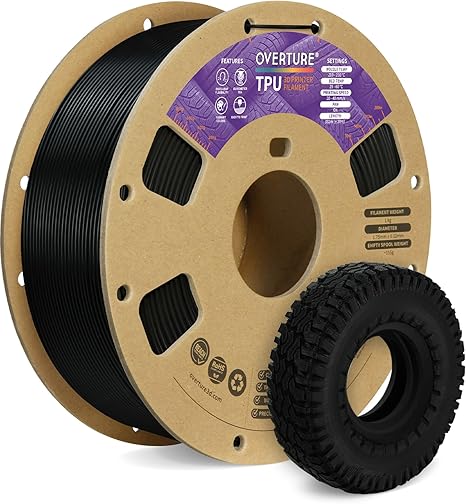
Discover the perfect balance of flexibility and durability with the OVERTURE TPU Filament 75mm Flexible Roll. Designed to deliver smooth, clog-free printing, this filament achieves a Shore hardness of 95A, making it an excellent choice for projects requiring soft yet resilient material.
Whether creating wearable designs or functional flexible parts, it adapts seamlessly to diverse needs.
Crafted with precision, the TPU filament supports impressive layer adhesion and a flawless finish. Its thoughtful packaging guarantees freshness and reliability, ensuring consistent print quality every time. Available in multiple vibrant colors, this filament encourages creativity across various 3D printing applications.
Available in multiple vibrant colors, this filament encourages creativity across various 3D printing applications.
OVERTURE’s TPU filament is engineered from thermoplastic polyurethane, combining strength and softness for exceptional resilience. The filament maintains consistent diameter and smooth feeding, which minimizes printing issues such as clogs or bubbles.
This results in quality prints that feature flexibility without sacrificing structural integrity.
Layer bonding with this TPU is notably reliable, providing smooth, professional-looking surfaces on your flexible prints. The filament undergoes thorough drying and vacuum-sealing to preserve its optimal condition, reducing the risk of moisture-related defects. Its compatibility spans a broad range of consumer and industrial 3D printers, accommodating many setups without special adjustments.
Suitable for flexible applications including robotics parts, wearable fashion elements, and other custom designs, the filament offers users dependable performance. Along with dedicated support from the manufacturer, it holds a shelf life of one year under proper storage conditions. This filament is a solid choice for anyone seeking reliable, quality flexible material that consistently meets expectations.
Pros
- Excellent flexibility with durable Shore 95A hardness
- Patented clog-free formulation ensures smooth, hassle-free printing
- Vacuum-sealed packaging maintains filament quality and longevity
Cons
- Requires careful moisture control to maintain optimal print results
Overall, the OVERTURE TPU filament offers a dependable solution for flexible 3D printing needs. Its balance of softness and strength, combined with user-friendly features, makes it an excellent addition to various projects. Compared to similar options, it delivers consistent performance and value with minimal complications.
Compared to similar options, it delivers consistent performance and value with minimal complications.
5. FLASHFORGE PLA Flexible 1.75 mm, 4X longer stretch 3D Printer
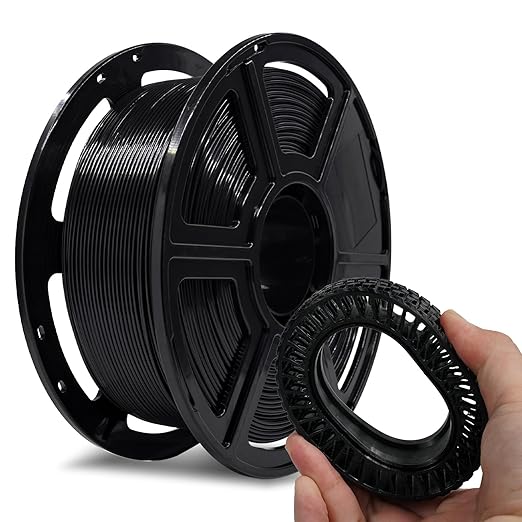
Discover a flexible 3D printing filament designed to stretch and adapt with ease. FLASHFORGE PLA Flexible offers impressive elasticity, allowing your creations to endure more wear and tear.
You can use this filament for crafting insoles, accessories, and decorative elements that require durability and stretch. Its engineered quality ensures smooth extrusion and consistent results, making it suitable for both beginners and those with more experience.
The FLASHFORGE PLA Flexible 75 mm filament features elasticity surpassing traditional TPU, capable of stretching up to four times its length. This makes it ideal for flexible, durable prints that maintain form under stress.
Designed to work effectively with both Bowden and direct drive extruders, it simplifies printing flexible materials without complicated machine adjustments.
Each spool is dried for 24 hours and vacuum-sealed to reduce moisture-related issues, promoting reliable, clog-free printing sessions. Precision in filament diameter is maintained within a ±
Additionally, it prints well without specialized heated beds or nozzle settings, reducing common problems like warping and improving final prints’ quality.
Whether crafting simple phone cases or complex art projects, this filament combines versatility and ease of use. Its performance is enhanced by the ability to print smoothly at moderate speeds, recommended for detailed designs to avoid imperfections.
Pros
- Excellent elasticity, stretching up to four times original length.
- Compatible with Bowden and direct drive extruder systems.
- Vacuum-sealed and pre-dried for smooth, clog-free printing.
Cons
- Requires slower print speeds to avoid warping or gummy details.
This flexible filament delivers dependable performance and superb stretchability. It offers a balance of ease and quality that enhances your printing possibilities.
Ideal for users wanting effective flexible material without extensive machine modifications.
6. SUNLU TPU Filament 1.75mm, 95A Flexible 3D Printer Filament, Soft

Experience superior flexibility and durability in your 3D prints with the SUNLU TPU Filament 75mm.
Crafted from thermoplastic polyurethane, this filament combines softness with resilience, making it ideal for projects that demand elastic properties and wear resistance.
Designed for consistent performance, it delivers smooth layering and excellent adhesion. Its precise diameter and color stability ensure reliable prints for various functional prototypes and creative applications.
The SUNLU TPU filament offers a balanced Shore hardness of 95A, delivering a soft yet sturdy finish that withstands impact and wear. It prints effortlessly at recommended settings of 210-230°C nozzle temperature and 50-60°C bed temperature.
Its dimensional accuracy of ±03mm supports compatibility with most 75mm FDM 3D printers.
This filament is resistant to oils and aging, providing long-lasting, vibrant results without bubbling or stringing.
Users will appreciate the ease of use through excellent layer adhesion and smooth extrusion. The filament’s versatility extends to items like gaskets, phone cases, watch bands, and even drone parts, lending reliability in both daily-use and protective applications.
Pros
- High flexibility combined with strong wear and impact resistance
- Precise 1.75mm diameter with minimal variation ensures printer compatibility
- Excellent adhesion and smooth printing without bubbles or stringing
Cons
- Performance might be enhanced by using a filament dryer before printing
SUNLU TPU Filament blends quality, flexibility, and ease of printing into one reliable product. Its robust performance makes it a strong choice for projects requiring flexible, durable prints suited for both hobbyists and professionals.
7. AMOLEN 95A TPU 3D Printer Filament, 1.75mm Glow in The

Introducing the AMOLEN 95A TPU 3D Printer Filament, a unique glow-in-the-dark filament that transforms your 3D prints into luminous masterpieces. Perfectly crafted to combine flexibility with durability, it brings bright, eye-catching effects to your creative projects.
This filament adds excitement to nighttime displays and showcases intricate designs with its vibrant glow. It’s an excellent choice for anyone looking to add a fresh dimension to their 3D printing projects without sacrificing strength or precision.
The filament offers a high elastic Shore hardness of 95A, allowing it to stretch up to three times its length without losing form. This feature delivers a perfect balance between flexibility and resilience, ideal for crafting durable and flexible prints. The glow effect is striking without being dull during daylight, maintaining the original color vibrancy of luminous filament.
The glow effect is striking without being dull during daylight, maintaining the original color vibrancy of luminous filament.
Precision is a priority with the 75 +/-
02mm diameter consistency, ensuring smooth extrusion on FDM printers that support 75mm filament. Manufactured with raw materials sourced from the USA, it guarantees a clog-free experience thanks to its carefully dried and vacuum-sealed packaging to keep moisture and dust at bay.
The spool is neatly wound via an intelligent winding system, allowing hassle-free feeding and preventing tangles during printing. With a recommended temperature range of 190-220℃ and an optional heated bed setting from 0-60℃, it is compatible with a wide range of 3D printers, supporting layer heights around
15mm for detailed outcomes. Easy to handle and reliable, it suits artists, hobbyists, and DIY creators looking for creative flexibility paired with lasting quality.
Pros
- Striking glow-in-the-dark effect with true color vibrancy
- High elasticity with a shore hardness of 95A for durability
- Consistent 1.75mm diameter for smooth, clog-free printing
Cons
- Requires some fine-tuning in print settings for best results
Combining vibrant glow effects with excellent flexibility, the AMOLEN 95A TPU filament stands out as a reliable choice for specialized 3D printing projects. Its consistent quality and durable material ensure satisfying results for creative prints that demand both resilience and visual appeal.
8. FlexiTough Flexible 3D Printer Filament Specifically for Printing Real-Game Bouncy

Discover the FlexiTough Flexible 3D Printer Filament, designed specifically for creating realistic airless basketballs and other sports balls. This innovative filament offers an impressive balance of durability and elasticity, allowing your 3D printed balls to mimic the feel and bounce of real ones.
Perfect for a variety of sports applications, it expands creative possibilities beyond traditional printing materials.
The filament’s compatibility with most FDM 3D printers makes it an accessible choice for hobbyists and project makers alike. Whether used for school projects, sports clubs, or personal innovations, it turns your printer into a versatile tool for crafting functional sports equipment. Experience high-performance prints that bring your athletic designs to life.
Experience high-performance prints that bring your athletic designs to life.
FlexiTough stands out with its specialized formulation aimed at airless basketball production, providing unmatched rebound and toughness. Its 75mm diameter ensures precise layer deposition with a minimal tolerance of +/-
03mm. The filament works smoothly with both Bowden and direct drive extruders, handling flexible material demands with ease and consistency.
Printing with this filament requires patience; slowing print speeds to about half the default is recommended for best results. Once printed, support removal demands care and some sanding to achieve a smooth surface, reflecting the material’s sturdy nature. The final product approaches the weight and size of official NBA balls, delivering a true-to-life sporting experience.
Ideal for those looking to produce durable, bouncy sports balls, this filament offers creative freedom paired with physical performance. Its quality construction ensures prints that won’t easily break while maintaining a satisfying bounce, making it suitable for both practice and display. The filament’s reliability and aesthetic appeal cater well to anyone invested in 3D sports printing projects.
The filament’s reliability and aesthetic appeal cater well to anyone invested in 3D sports printing projects.
Pros
- Delivers realistic bounce and tough elasticity for 3D printed balls
- Compatible with most FDM printers and flexible extrusion systems
- Produces airless basketballs that closely match official ball size and weight
Cons
- Support removal can be challenging and requires sanding for a smooth finish
FlexiTough sets itself apart as a specialized filament for sports ball printing, combining performance and durability in one product. It accommodates flexible printing needs while providing an authentic bounce, making it a valuable choice for creative and functional 3D printing projects.
9. AMOLEN TPU 3D Printer Filament Bundle, Transparent Multicolor Rainbow TPU

AMOLEN TPU 3D Printer Filament Bundle offers vibrant, transparent multicolor options that bring your 3D prints to life. Designed for flexibility and durability, this filament set is perfect for creative projects needing smooth finishes and reliable performance.
Whether you’re experimenting with new designs or producing functional parts, these high-quality filaments support consistent printing at high speeds. The bundle includes four unique colors, providing variety without the hassle of multiple purchases.
The AMOLEN TPU filament features excellent toughness and outstanding shaping abilities. It melts evenly and feeds smoothly through the nozzle, preventing any clogging or jamming issues during printing.
Compatibility spans most FDM 3D printers such as Ultimaker, Prusa i3, MakerBot, and many others. This versatility makes it suitable for both beginners and advanced users who require flexible material for diverse applications. Included in the package are 200 gram spools in four colors, making it economical for those testing multiple shades.
Included in the package are 200 gram spools in four colors, making it economical for those testing multiple shades.
Each spool is vacuum-sealed to maintain dryness and protect the filament from dust contamination. The transparent spools allow easy color identification during use. Overall, the bundle offers great value with dependable filament quality, ease of use, and enhanced durability for your 3D printing needs.
Overall, the bundle offers great value with dependable filament quality, ease of use, and enhanced durability for your 3D printing needs.
Pros
- Supports high-speed printing with smooth, bubble-free filament.
- Compatible with a wide range of popular FDM 3D printers.
- Includes four vibrant and transparent colors in reusable vacuum packaging.
Cons
- Each spool contains 200g, which may require frequent replacement for large projects.
AMOLEN’s TPU filament bundle perfectly blends flexibility, color variety, and printing reliability. It equips users with durable materials ideal for crafting standout prints while maintaining cost efficiency and ease of use.
10. Official Creality TPU Filament, Flexible 3D Printer Filament 1.75mm, 95A

Explore the versatility of the Official Creality TPU Filament, designed specifically for flexible 3D printing. This filament combines elasticity with durability, perfect for crafting dynamic models and functional items.
Its unique flexibility allows for creating objects that require stretch and resilience. Dedicated users can enhance their 3D printing projects using this premium filament.
The Official Creality TPU Filament features a shore hardness of 95A, providing excellent flexibility and strength. Its ability to stretch up to three times its original length makes it ideal for projects needing flexible materials. The filament also offers strong bed adhesion, preventing warping and ensuring smooth prints.
The filament also offers strong bed adhesion, preventing warping and ensuring smooth prints.
Manufactured with a patented clog-free technology, this filament supports smooth extrusion and reduces printing failures. Vacuum-sealed packaging with desiccants guarantees moisture-free filament for improved performance.
Additionally, every spool undergoes thorough manual inspection to avoid tangling and snapping issues.
Suitable for use with most desktop 3D printers, it performs best with direct drive extruders to maximize print success. The filament can be applied to producing wearable devices, shock-absorbing parts, seals, and other flexible accessories.
Pros
- High elasticity supporting up to three times stretchability
- Clog-free patented manufacturing ensures consistent printing
- Excellent bed adhesion with minimal warping and low odor
Cons
- Recommended mainly for use with direct drive extruders for best results
Overall, the Official Creality TPU Filament delivers reliable and flexible printing performance. It offers users a high-quality option for projects requiring durable, elastic materials with steady extrusion and dimensional accuracy.
11. SUNLU TPU 3D Printer Filament 1.75mm, High Speed 95A TPU

Experience superior flexibility and resilience with the SUNLU TPU 3D Printer Filament 75mm. Designed for fast printing, this filament excels at combining softness with durability, ideal for crafting flexible parts effortlessly.
It offers a smooth finish and strong layer bonding that brings your creative projects to life.
Perfect for applications ranging from robotics components to wearable accessories, the SUNLU TPU filament adapts well to various printing needs. Multiple vibrant color options allow for personalized designs, enhancing both functionality and aesthetics in your 3D prints.
The SUNLU TPU filament is engineered to print up to three times faster than standard TPU filaments while maintaining a Shore hardness of 95A. This balance provides excellent elasticity without sacrificing toughness, making it suitable for items exposed to daily wear and impact.
Layer adhesion is exceptional, ensuring your printed parts hold together reliably with a flawless surface finish. Recommended settings include a nozzle temperature between 210-230°C and a bed temperature of 50-60°C, supporting print speeds up to 120mm/s for efficient production. The filament’s
The filament’s 75mm diameter boasts consistent dimensional accuracy, reducing common printing issues like jamming or under-extrusion.
This filament caters to creators who require flexibility paired with precision, whether producing gaskets, phone cases, insoles, or custom wearable devices. Its broad color range enhances design possibilities, while build quality supports versatile, long-lasting prints.
Pros
- Fast printing speed up to three times quicker than typical TPU filaments.
- Excellent flexibility with Shore hardness of 95A suitable for impact-resistant applications.
- Wide selection of vibrant colors to suit various creative projects.
Cons
- Smaller spool size (250g each) may require frequent changes during large projects.
Offering remarkable speed and flexibility, SUNLU’s TPU filament is a solid choice for producing durable, flexible 3D prints. Its consistent quality and multiple color selections provide excellent value for users focused on flexible filament projects.
12. YXPOLYER Flexible PLA Food-Safe 92A Soft PLA 3D Printer Filament
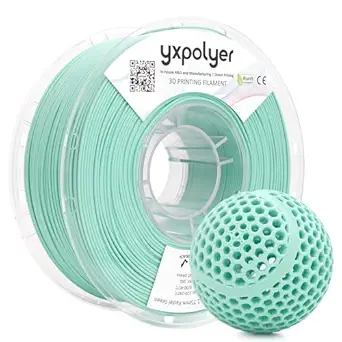
Discover the versatility of YXPOLYER Flexible PLA Food-Safe 92A Soft PLA 3D Printer Filament, designed to blend durability and elasticity. This filament stands out for its ability to create flexible, resilient prints with a lifelike rebound effect, making it ideal for unique 3D printing projects.
Crafted to meet FDA food safety standards, it opens up new possibilities in printing items safe for direct contact with food or pets. Its forgiving print characteristics empower hobbyists and professionals to achieve quality results with a smooth printing experience.
YXPOLYER’s Flexible PLA offers a remarkable combination of toughness and softness, enabling prints that endure bending and stretching without damage. It excels in producing objects like airless basketballs and flexible toys, matching real elastic behavior for greater realism. The material prints smoothly with minimal stringing when proper settings are applied.
The material prints smoothly with minimal stringing when proper settings are applied.
Being food-grade certified, the filament is safe for projects intended for pets or food applications. Its softness suits puzzle feeders and chew toys.
Utilizing a TPU printing approach, users should print at low speeds with efficient cooling and a 6 mm nozzle to reduce clogging risks. Pre-drying the filament also prevents moisture issues, ensuring consistent extrusion.
Print examples on Bambu Lab printers demonstrate achievable surface quality, though minor surface unevenness may need sanding. It presents a solid choice for those needing a flexible, safe, and reliable filament versus standard PLA or other flexible materials.
This filament accommodates a broad range of hobbyist to practical uses with dependable performance.
Pros
- Enhanced elasticity and toughness for durable flexible prints
- FDA food-grade certification ensures safety for food and pet applications
- Minimal stringing and smooth adhesion with proper print settings
Cons
- Some minor surface finishing like sanding may be required
Balancing flexibility, food safety, and print quality, YXPOLYER Flexible PLA proves a dependable material for specialized 3D printing needs. Whether crafting resilient toys or safe household items, it delivers performance and versatility at every step.
13. GIANTARM TPU Filament 1.75mm Flexible Soft 3D Printer Consumables Black,95A

Discover a filament that balances flexibility with reliability for your 3D printing projects. The GIANTARM TPU Filament, with its shore hardness of 95A, offers outstanding elasticity and durability. Its sleek black finish suits a wide range of applications requiring flexible materials.
Designed for smooth printing and consistent results, this filament promises less hassle and more creativity. It is an ideal choice for users looking to print flexible parts without compromising strength or surface quality.
The GIANTARM TPU Filament features excellent elasticity, stretching up to three times its original length. Its low odor and superior bed adhesion minimize printing challenges, supporting clean and stable builds.
The filament’s shore hardness of 95A delivers a satisfying balance between softness and durability for numerous versatile uses.
Manufactured under strict dimensional controls, this TPU maintains a diameter accuracy within ±05 mm, ensuring smooth extrusion and consistent layer quality. The filament spool undergoes thorough drying and is vacuum-sealed with desiccants, preventing bubbles and tangles during printing.
The filament spool undergoes thorough drying and is vacuum-sealed with desiccants, preventing bubbles and tangles during printing. It supports a hassle-free extrusion process with patented clog-free technology, making it ideal for various desktop 3D printers.
A wide compatibility profile suits many standard and advanced 3D printers, making it an excellent pick for hobbyists and professionals alike. Its robust mechanical winding also reduces filament snapping, providing user confidence when producing protective parts, custom accessories, or intricate flexible components.
Pros
- High elasticity with shore hardness of 95A for durable flexible prints
- Clog-free, bubble-free design ensures smooth and reliable extrusion
- Strict diameter tolerance enhances printing consistency and quality
Cons
- Only available in black, limiting color options for some projects
This filament combines flexibility with strong mechanical properties, making it a reliable option for printing resilient parts. Its ease of use and consistent output place it ahead of many flexible filaments, particularly for those prioritizing dependable performance and dimensional accuracy.
14. Comgrow TPU Filament, 1.75mm, 95A Soft TPU Flexible 3D Printer

Discover the versatility of the Comgrow TPU Filament, designed to produce flexible and durable 3D prints with ease. This
75mm filament offers a perfect balance of softness and strength, suitable for a range of creative and functional projects.
Crafted with a 95A Shore hardness, it ensures excellent flexibility while keeping your prints resilient. Ideal for users seeking reliable material performance, the filament supports extended print sessions without sacrificing quality.
The filament comes on a standard 1kg spool of black TPU, making it easy to handle and store. It works seamlessly with most FDM 3D printers that feature direct drive extruders. Printing within the recommended temperature range of 210-230°C helps achieve smooth surface finish and strong layer adhesion.
Printing within the recommended temperature range of 210-230°C helps achieve smooth surface finish and strong layer adhesion.
The material’s thermoplastic polyurethane composition is known for both elasticity and toughness, providing prints that bend without breaking. Its reliable dimensional accuracy supports precision in complex models and prototypes.
Built for hobbyists and professionals alike, this filament suits projects requiring flexible parts such as gaskets, wearable accessories, and shock-absorbing components. The quality rivals that of higher-end brands, presenting excellent value without compromising print results.
Pros
- Soft 95A TPU offers impressive flexibility and durability
- Compatible with many direct drive FDM 3D printers
- Consistent dimensional accuracy and strong layer adhesion
Cons
- May not perform well on printers without direct drive extruders
With its flexible nature and dependable print quality, the Comgrow TPU Filament stands out as a solid choice for producing resilient and bendable 3D objects. It offers a balance of performance and ease of use, making it a competitive option among flexible filament brands.
15. SUNLU TPU Filament 1.75mm, 95A Flexible 3D Printer Filament, Soft

Experience the flexibility and durability required for versatile 3D printing projects with SUNLU TPU Filament 75mm.
Designed to deliver smooth and reliable printing, this filament stands out for its precision and wear resistance. Whether you need flexible phone cases or custom wearable parts, it adapts to your creative needs effortlessly.
SUNLU TPU filament features a Shore hardness of 95A, combining elasticity with strong impact resistance. It offers consistent layer adhesion, which helps in achieving clean and detailed prints without bubbles or cracks. The filament resists wear, oil, and aging, maintaining the quality of printed objects over time.
The filament resists wear, oil, and aging, maintaining the quality of printed objects over time.
Its 75mm diameter is produced with a tight tolerance of ±03mm, ensuring compatibility with most FDM 3D printers.
Printing performance improves with recommended settings: nozzle temperature between 210 to 230°C, bed temperature of 50 to 60°C, and print speed ranging from 80 to 120mm/s. This allows faster results without compromising the finish.
The filament’s resilient properties make it suitable for a wide range of applications including gaskets, wearable devices, seals, and protective cases. It combines ease of use with durable material characteristics, providing great value for hobbyists and professionals seeking flexible filament options.
Pros
- Strong impact and wear resistance with excellent elasticity
- Wide compatibility due to precise 1.75mm diameter tolerance
- Easy to print with stable layer adhesion and minimal bubbling
Cons
- Performance can vary if filament moisture is not controlled
SUNLU TPU Filament offers reliable print quality and material flexibility suited for many practical 3D printing tasks. It balances performance and durability, making it a strong contender when selecting the best 3D printer filament for flexible materials.
Top Picks for the Best 3D Printer to Master Flexible Filament Printing
Software and firmware features
When selecting a 3D printer suitable for flexible filament, compatibility with various slicer programs plays a significant role in achieving quality results. Many slicer applications come equipped with preloaded profiles specifically designed for flexible materials, which simplify setup by automatically adjusting parameters such as print speed, retraction, and temperature.
Being able to customize print settings further adds value, allowing users to tweak layer height, infill density, and cooling to match the unique characteristics of different flexible filaments. In addition, the firmware of the printer should support filament-specific tuning features like adjustable jerk control and extrusion speed to reduce stringing and improve print accuracy. These software and firmware capabilities work in tandem to provide smooth printing experiences with flexible filaments, making it easier to produce durable and flexible prints without frequent trial and error.
Print bed compatibility
When selecting a printer for flexible filament, the type of print bed plays a significant role in achieving high-quality prints. Flexible filaments require print beds that maintain good adhesion without damaging the material, so surfaces like PEI sheets, BuildTak, or specially textured glass plates are often recommended because they provide the right grip while allowing easy removal after printing. A heated bed is usually necessary to help the filament stick properly during the printing process and reduce warping, with temperature settings generally ranging between 40 to 70 degrees Celsius depending on the filament brand.
Paying attention to the print bed material and its compatibility with flexible filaments ensures smoother printing experiences and reduces the chances of print failures, especially when working with softer, more pliable materials that can tend to detach or curl if the bed surface is inadequate. Balancing heat management and surface adhesion makes a noticeable difference when producing flexible parts, which is why matching the print bed type to the filament’s physical properties leads to better reliability and consistent results in your prints.
Print speed and precision
When working with flexible filament, maintaining appropriate printing speeds is key to achieving smooth and reliable results. Printing too quickly can cause the filament to bend or jam, so using moderate speeds designed for flexible materials helps to minimize these issues. Layer resolution plays a significant role in the final appearance and strength of prints; finer layer heights allow for more detailed and polished objects, while slightly thicker layers can contribute to greater durability, making the prints better suited for functional use.
Balancing speed and layer quality enhances the overall performance because slow and precise movements prevent distortion or warping, resulting in clean, well-defined shapes. Attention to these factors can greatly improve the quality and longevity of printed items, especially when working with softer, more elastic filaments where consistency matters most.
Filament support and handling
When choosing a 3D printer suitable for flexible filaments like TPU or TPE, the printer’s ability to handle various filament diameters plays a significant role in achieving consistent print quality. Printers that support common filament sizes such as
75 mm and 85 mm offer more versatility, allowing users to experiment with different materials easily. Equally important is the design of the filament feeding mechanism; printers equipped with direct drive extruders tend to perform better with flexible materials since this setup reduces the distance the filament travels before reaching the hotend, minimizing the chance of filament buckling or jamming.
Smooth, enclosed filament paths help in maintaining steady extrusion and reduce friction that could otherwise interfere with the delicate nature of soft filaments. These features not only improve print reliability but also expand the range of projects one can undertake, from wearable accessories to intricate flexible parts.
When evaluating options, focusing on how the printer manages flexible filaments through its hardware design can significantly enhance the printing experience and final output quality.
Extruder and nozzle design
The way a 3D printer handles filament greatly influences print quality, especially with flexible materials, and the design of the extruder and nozzle plays a key role here. Printers with direct drive extruders tend to work better with flexible filament because the shorter filament path reduces the chance of bending or kinking, which can cause jams. In contrast, Bowden extruders, where the filament is pushed through a longer tube before reaching the hotend, may struggle more with flexible filament due to increased friction and less precise control.
Nozzle size and material also affect performance; smaller nozzles offer finer details but can clog easier, so a balanced size around 4 mm is often recommended.
Additionally, nozzles made from hardened steel or coated materials resist wear from abrasive filaments better than standard brass. Retraction settings must be adjusted carefully when printing with flexible filament since too aggressive retraction can lead to filament deformation or clogging, while too little might cause stringing. Gentle retraction speeds and minimal distances allow smoother extrusion and cleaner results.
Gentle retraction speeds and minimal distances allow smoother extrusion and cleaner results. Keeping these points in mind helps when selecting a 3D printer capable of delivering successful prints with flexible filament by focusing on the right combination of extrusion mechanism, nozzle choice, and fine-tuned printing parameters.
Additional features and considerations
Choosing the best 3d printer for flexible filament involves paying close attention to several important aspects. Build volume and printer size should match the scale of your projects, as larger volumes allow for printing bigger flexible items but may require more space.
Ease of assembly and maintenance plays a significant role in a smooth experience; a printer that comes partially assembled with clear instructions can save time and reduce frustration, especially when experimenting with flexible materials that sometimes need precise adjustments. Budget and warranty options also influence the decision considerably; while higher-end models may offer enhanced features and reliability suited for flexible filaments, options with solid warranties provide peace of mind and support in case of issues. Considering how often the printer will be used and the typical size of prints can guide you toward the right balance between functionality and cost, making the purchase more satisfying in the long run.
FAQ’s
What Features Should I Look For In A Printer To Successfully Print With Flexible Filament?
To successfully print with flexible filament, look for a printer with a direct drive extruder and a heated bed for better adhesion. Additionally, ensure the printer supports adjustable print speed and flexible filament settings to prevent nozzle jams and improve print quality.
Are There Any Budget-Friendly Printers That Handle Flexible Filaments Well?
Yes, the Creality Ender 3 V2 is a budget-friendly printer known for handling flexible filaments like TPU effectively with some adjustments. Additionally, the Prusa Mini offers reliable flexible filament printing at a reasonable price, making both great options for cost-conscious users.
What Tips And Settings Can Improve Print Quality When Using Flexible Filaments?
To improve print quality with flexible filaments, use a slower print speed and enable a direct drive extruder if possible to reduce filament bending. Additionally, adjust retraction settings to minimal or off, and print with a slightly higher nozzle temperature to ensure better layer adhesion.
How Does Printing With Flexible Filament Differ From Printing With Standard Pla Or Abs Filaments?
Printing with flexible filament requires slower print speeds and careful retraction settings to prevent jams, as the material is softer and more prone to bending inside the extruder. Unlike standard PLA or ABS, flexible filaments often need a direct drive extruder and specialized print bed adhesion techniques to ensure successful prints.
Which Printers Are Considered The Best For Printing With Tpu And Other Flexible Materials?
The best printers for printing with TPU and other flexible materials are typically those with a direct drive extruder, such as the Prusa i3 MK3 or the Creality Ender 3 with an upgraded extruder. These printers offer better filament control and reduced risk of jamming, making them ideal for flexible filaments.
Conclusion
Choosing the best 3d printer for flexible filament involves balancing precision, ease of use, and reliable filament handling. Models designed specifically for flexible materials often feature specialized extruders or direct drive systems that reduce filament jams and improve print quality. While these printers may come at a higher price point compared to standard machines, the investment pays off for users seeking consistent, high-quality flexible prints.
While these printers may come at a higher price point compared to standard machines, the investment pays off for users seeking consistent, high-quality flexible prints. Those working on wearable prototypes, custom grips, or soft components will find these printers particularly beneficial. Potential buyers should consider print size, material compatibility, and support resources before deciding.
Overall, selecting a 3d printer tailored for flexible filaments ensures better results and increased satisfaction without unnecessary frustration.


